
In the ever-evolving landscape of industrial automation and procedure control, the importance of monitoring and controlling different criteria such as fluid degrees, flow rates, and pressure can not be overstated. Technologies such as ultrasonic liquid level sensors, differential pressure (dp) transmitters, and different sorts of flow meters have emerged as crucial elements for making certain functional performance and security in industries ranging from water therapy to oil and gas. Ultrasonic liquid level sensors operate the principle of giving off ultrasonic waves to determine the range to the surface area of a liquid, which permits individuals to keep precise liquid degrees, essential for stopping overflows or lacks that can interrupt procedures. With their non-contact nature, these sensors are especially helpful for determining levels in challenging environments, such as in huge tanks or when monitoring destructive liquids, therefore guarding the honesty of the measurement system.
Matching the performance of level picking up, dp transmitters are indispensable for measuring pressure differences throughout various factors in a system, supplying important understandings right into flow prices and fluid characteristics. They play an essential function in applications such as filter monitoring or liquid level measurement where knowing the pressure decrease can inform operators of the system’s problem. The differential pressure transmitter, for circumstances, aids determine the flow rate in a pipeline by calculating the pressure differential throughout an obstruction, consequently sustaining process optimization and energy efficiency.
When it concerns liquid flow measurement, one can choose from a variety of flow meter types, each fit for certain applications and operating problems. Inline water flow meters, as an example, are indispensable to countless systems as they provide real-time dimensions of liquid flow in a simple, straight way. On the other hand, magnetic water flow meters leverage electro-magnetic principles to gauge speed and can be particularly important in applications where the liquid being gauged is conductive. Both types of flow meters help markets abide with governing requirements by making certain accurate dimensions which are critical for payment, inventory monitoring, and procedure monitoring.
Discover industrial pressure transducers exactly how precise measurement and sensing innovations, such as ultrasonic level sensors, differential pressure transmitters, and flow meters, play a vital function in improving operational effectiveness and safety and security in industrial automation and procedure control.
One more ingenious option for flow measurement is the clamp-on flow meter, which can be affixed externally to a pipeline, using a non-invasive ways of determining flow without interrupting the system. This flexibility significantly simplifies installation and allows for fast deployment in existing systems without needing alterations. In a similar way, turbine-type flow meters supply precise flow measurement by utilizing rotating blades to evaluate the rate of fluid travelling through, serving well in applications where precision is critical.
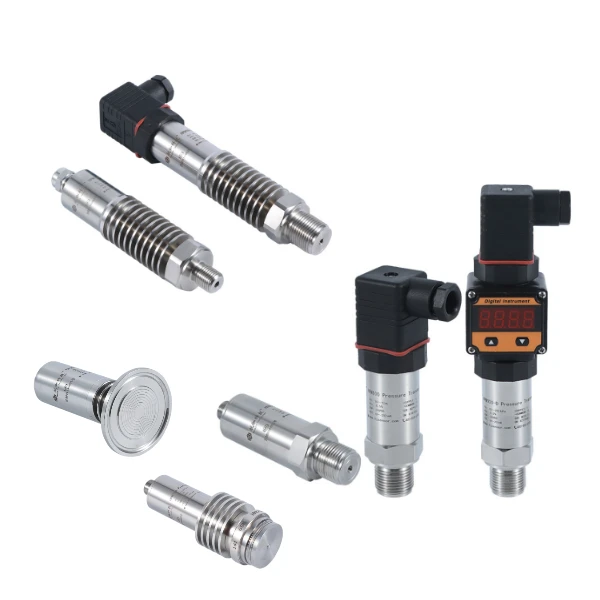
For pressure monitoring and control, the variety of pressure transducers readily available makes certain that there is an appropriate device for virtually every application conceivable. Industrial pressure transducers are created to stand up to rough environmental conditions while providing dependable pressure measurements. For specialized requirements, there are vacuum pressure transducers, which provide improved accuracy in measuring reduced stress, and absolute pressure transducers that gauge pressure loved one to a vacuum, making them perfect in scenarios where precise pressure requires to be understood, such as in vacuum systems and high-altitude applications.
Torque transducers, consisting of rotary torque sensors, are likewise critical in applications involving rotational pressures. These devices step torque in mechanical systems, which is crucial for comprehending and maximizing maker efficiency. The combination of torque measurement within a wider system boosts the capacity to monitor and manage industrial procedures, causing improved performance and decreased downtime through anticipating maintenance protocols.
As we browse with varying temperatures and stress in industrial processes, the requirement for high-temperature pressure sensors comes to be noticeable. These specialized sensors can run in severe conditions while giving crucial data to protect equipment from failing. Technologies like submersible hydrostatic level transmitters are used in groundwater monitoring or aquaculture systems, using exact level measurements also when completely immersed. Likewise, guided radar level transmitters employ radar technology to measure the range to a liquid’s surface area, offering reliable level measurement irrespective of temperature or pressure changes, making them ideal for complicated industrial environments.
In enhancement, high-temperature gas pressure sensors are crucial for procedures involving gases that require to be monitored for pressure in contexts such as heating system or central heating boiler operation. As sectors require more reputable and durable measurement solutions, the mix of different technologies, including guided wave radar level sensors, reinforces total system performance by allowing more exact and trustworthy data collection.
The implementation of innovative measurement devices is not full without thinking about the ins and outs included in their operation and application. The working principle of a rotameter, which utilizes a float that falls and increases within a conelike tube, provides understanding right into flow prices by offering a direct aesthetic indication of flow via the placement of the float. This simplicity and directness make rotameters suitable for low-pressure applications and small-scale flow monitoring.
In the context of managing fuel degrees in industrial setups, diesel fuel tank level monitoring systems play a crucial function in ensuring that operations remain undisturbed while complying with ecological guidelines. By incorporating level sensors and communication innovations, these systems can provide real-time information transmission, therefore allowing drivers to track fuel usage and anticipate when refueling will certainly be needed. The raising demand for lasting methods in sectors has actually emphasized the need for accuracy in fuel management, highlighting the value of integrating sophisticated monitoring technologies.
Discover just how precise measurement and picking up innovations, such as ultrasonic level sensors, differential pressure transmitters, and flow meters, play a crucial function in improving functional performance and security in industrial automation and procedure control.
When seeking these sophisticated measurement solutions, it is necessary to partner with trusted flow meter suppliers, distributors, and representatives who can supply top quality tools backed by technical support. Whether you’re trying to find pressure transmitter manufacturers for specific pressure control systems or discovering options for magnetic flow transmitters, choosing a dependable supplier is essential to accomplishing the desired outcome in any industrial application. The growing market for these vital devices showcases the critical duty they play in contemporary industries, assisting in both conformity and functional efficiency.
As modern technologies remain to improve, understanding the subtleties of various determining devices and exactly how they adjoin within a system will certainly equip individuals to make educated choices, leading to maximized processes. In specific, the advancement of intelligent pressure sensors and flow measurement devices, made to interface with modern-day industrial control systems, exhibits a shift in the direction of incorporated remedies that not only determine but additionally supply actionable information understandings.
Whether through progressed sensors, innovative flow meters, or exact transducers, the future of industrial measurement and control is most certainly headed towards greater refinement and efficiency, enabling sectors to fulfill the expanding needs of the worldwide industry while focusing on sustainability and safety and security. As markets accept these ingenious measurement services, the opportunities for enhancing operational circulations and protecting resources end up being essentially limitless.