
Natural gas has become the pivot of the global energy transition, and with it, the debate over where that gas should come from has grown louder. The comparison between onshore and offshore gas production is no longer a purely technical question; it is a question of market position, capital strategy, and geopolitical reach. Yet the phrase onshore oil and gas is often used loosely, mixing together industries that differ in cost structure, risk profile, and workforce needs. This analysis separates the two concepts and compares the combined onshore and offshore gas value chain against the broader onshore oil and gas industry across the dimensions that shape global energy strategy.
Different Roles in the Global Energy Mix
Onshore gas, from shale plays to conventional basins, has become the swing supplier of the global market. It responds quickly to price signals, brings new capacity online in months rather than years, and sits close to the fastest-growing demand centers in Asia and the Middle East. Offshore gas, by contrast, plays a different role: it is the frontier resource, the deepwater and subsea projects that open entirely new basins, often in partnership with LNG export infrastructure. Together, onshore and offshore gas supply the flexibility and the scale that the energy transition demands, and both are expected to keep growing even as renewable capacity expands.
The comparison with onshore oil and gas is instructive because the two industries share infrastructure but diverge in trajectory. Onshore oil and gas has decades of mature infrastructure, a deep service industry, and a well-understood cost curve. The gas-focused segment is younger in many regions, less tied to legacy assets, and more exposed to the fast-moving politics of carbon policy. Where onshore oil and gas competes on volume and efficiency, onshore and offshore gas compete on flexibility, cleanliness, and speed to market. That distinction explains why the same country may be cutting oil production while expanding gas capacity at the same time.
Cost Structures and Investment Logic
The investment logic differs sharply between the two worlds. Onshore gas wells are relatively cheap to drill, and the cost curve has fallen steadily thanks to horizontal drilling and multi-stage fracturing. Offshore gas projects, especially deepwater developments, carry capital costs that can run ten times higher per unit of production, but they also bring the advantage of dedicated export pathways through LNG terminals and long-term supply contracts. Onshore oil and gas projects sit somewhere between, driven primarily by oil price cycles and refinery economics rather than by the long-term gas supply agreements that anchor offshore development.
These cost differences cascade into very different risk appetites. Onshore gas development is the domain of independent producers and nimble midstream companies, while offshore gas is dominated by international oil companies and national champions with balance sheets built for decade-long payback periods. The risk profile determines the training culture as much as the geology does: onshore teams operate with lean staffing and fast decision cycles, while offshore teams train for long rotations, self-sufficiency, and the regulatory intensity of maritime operations.
Workforce and Training Implications
The workforce implications follow directly. Onshore gas operations, and the wider onshore oil and gas industry, rely on a broad base of drilling crews, production operators, and field technicians, with skills that transfer readily between sites. Offshore gas adds a layer of specialized competence: platform operations, marine systems, subsea intervention, and helicopter logistics, all wrapped in a stricter certification regime. Training programs must therefore answer two questions that do not have the same answer: what does every worker need to know, and what does the offshore-specific environment demand on top?
Simulation has become the common answer. Well control, drilling operations, and completion procedures are fundamentally the same physics on land and at sea, which means a single simulator platform can serve both curricula, with scenario libraries customized to each environment. Onshore and offshore gas training programs built this way let a student rehearse a pad-site operation in the morning and a platform emergency in the afternoon, building the shared foundation first and the environment-specific reflexes second. For the onshore oil and gas segment, the same platform covers the traditional curriculum that has served the industry for decades.
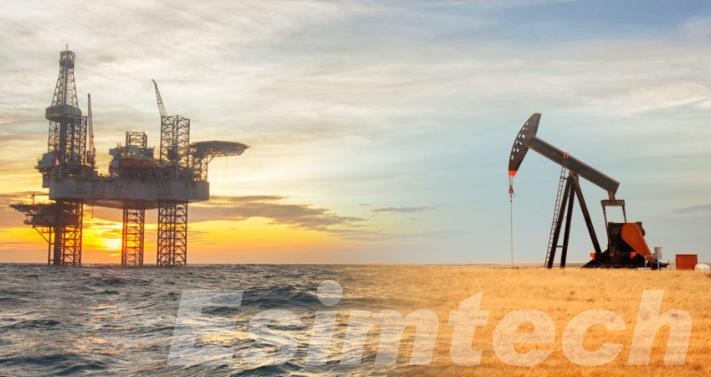
Market Trends and What They Mean
The market signals of the last few years point one direction: gas demand is growing everywhere, but the supply response is split. Onshore production is expanding fastest in basins with good infrastructure, while offshore development is proceeding where giant fields and LNG access justify the capital. Meanwhile, the onshore oil and gas industry is consolidating and digitizing, with automation and remote operations reducing headcount in the field. The result is a labor market that needs fewer, better-trained people, with skills that span both environments.
For training organizations, the strategic implication is clear: build for the overlap, not the difference. The shared foundation of well control, drilling, and completion is the core of the curriculum, and the onshore-versus-offshore distinction is a specialization layer on top. Programs that teach both prepare students for a market where job boundaries are blurring, and they give employers a workforce that can flex between land and sea as project economics dictate. A detailed comparison of the two environments, such as the guide published on onshore and offshore gas, helps curriculum designers see where the overlap ends and the specialization begins.
Neither side of this comparison is disappearing. Onshore gas and offshore gas will both grow, and the broader onshore oil and gas industry will remain the backbone of liquid fuel supply for decades. The smart investments, in capital and in people, are the ones that recognize the differences without overstating them. The industry that thrives will be the one that treats gas as a single, flexible value chain with two very different operating theaters, and trains its people accordingly.